
Keep Your Gate Running: What You Need to Know About Automatic Gate Maintenance
Automatic gate maintenance is the regular process of inspecting, cleaning, lubricating, and testing your gate system to keep it safe, secure, and working reliably.
Here’s a quick overview of the core tasks:
| Frequency | Key Tasks |
|---|---|
| Monthly | Visual inspection, test auto-reverse, check sensors |
| Every 3-6 months | Lubricate hinges/chains/rollers, clean tracks, test battery backup |
| Annually | Professional motor inspection, electrical check, certification |
Without regular upkeep, even a well-installed gate can fail — often at the worst possible time. Think of it like a refrigerator: it just keeps working, until suddenly it doesn’t. The difference is that a stuck gate isn’t just inconvenient — it’s a security risk.
The stakes are real. With proper maintenance, an automatic gate system can last 15 to 25 years or more. Neglect it, and you could be looking at a full replacement in as little as 5 to 7 years.
There’s also a safety dimension that’s easy to overlook. Automatic gates are classified as machinery under regulations like the EU Machinery Directive (2006/42/EC), which mandates annual certified maintenance. In the US, gates must comply with safety standards like UL 325, which governs obstruction detection and auto-reverse functions. A gate that isn’t maintained can become a genuine hazard — especially for children.
I’m Bruce Kemp, an electrical contractor with hands-on experience in every stage of a job — from engineering and permitting to field work — and automatic gate maintenance sits squarely at the intersection of mechanical upkeep and electrical safety that I deal with every day. Let’s walk through exactly what it takes to keep your gate swinging smoothly and safely.
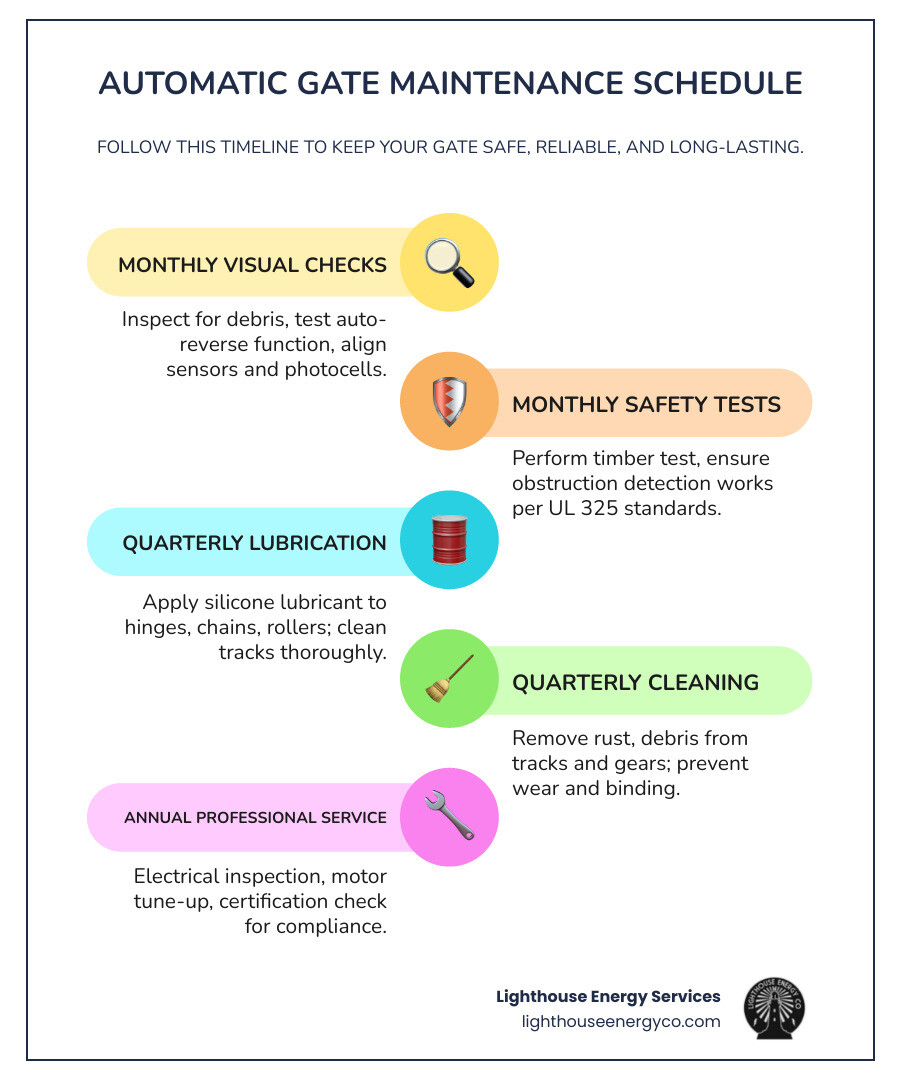
Simple automatic gate maintenance word guide:
Why Regular Automatic Gate Maintenance is Essential
When we talk about automatic gate maintenance, we aren’t just talking about keeping things looking pretty. We’re talking about a complex piece of machinery that sits outside 24/7, exposed to the South Florida sun, salt air, and torrential rains.
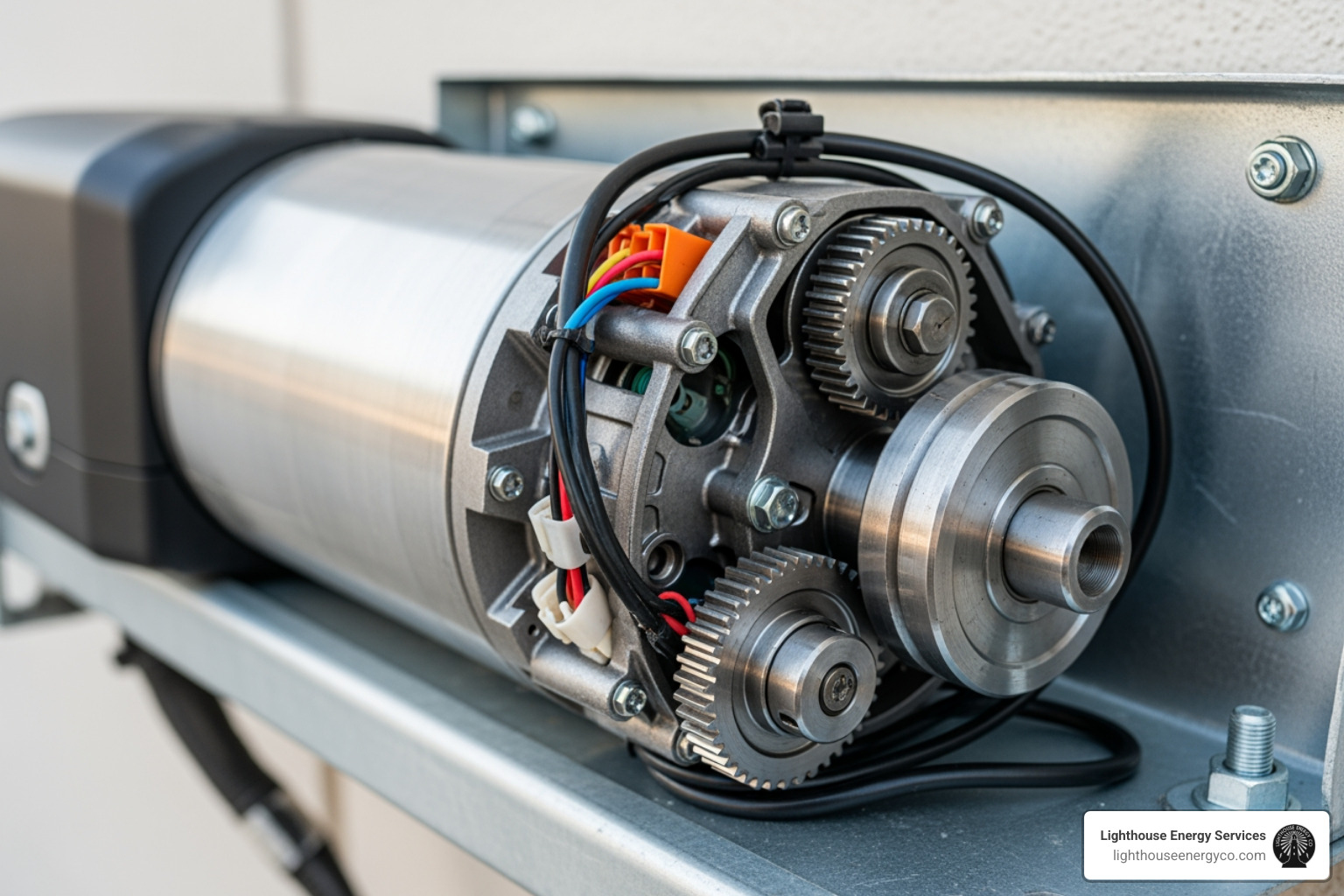
Safety and Compliance
First and foremost is safety. In the United States, the UL 325 standard is the gold standard for gate safety. It requires gates to have secondary entrapment protection, such as photo eyes or sensing edges. If these sensors get dirty or misaligned, the gate might not stop if a person or pet is in the way. Regular testing ensures these “eyes” are always watching out for your family.
Protecting Your Investment
An automatic gate is a significant investment that adds curb appeal and property value. However, a malfunctioning gate can actually devalue your home. Think of it this way: a potential buyer sees a gate that squeaks, jerks, or stays stuck halfway open, and they immediately start subtracting dollars from their offer.
Beyond aesthetics, there is a major financial incentive to stay proactive. A simple $50 lubrication service can prevent a $500 motor burnout. Research shows that while a well-maintained system can last up to 25 years, a neglected one might give up the ghost in just 5 to 7 years.
Electrical Reliability and Energy Efficiency
As electrical experts, we at Lighthouse Energy see the “invisible” side of gate failure. Electrical issues were the second leading cause of home fires in the US between 2015 and 2019, causing over $1.4 billion in property damage. While your gate motor is small, a short circuit or a pest-damaged wire in the control box can lead to bigger problems.
Furthermore, an efficient gate saves money. According to U.S. Department of Energy home energy audit insights, outdated or poorly maintained electrical systems can consume 5% to 30% more energy than necessary. When a motor has to fight against rusty hinges or a clogged track, it draws significantly more current, driving up your utility bill and wearing out the internal capacitors.
A Comprehensive Automatic Gate Maintenance Timeline
To make automatic gate maintenance manageable, we recommend breaking it down into a tiered schedule. Following a timeline ensures that small mechanical issues don’t turn into major electrical failures.
The Maintenance Master Table
| Frequency | Task Category | Specific Actions |
|---|---|---|
| Monthly | Safety & Visual | Test auto-reverse, clean photo eyes, check for physical damage. |
| Quarterly | Mechanical | Lubricate hinges and chains, clear tracks, check for rust. |
| Bi-Annually | Power Systems | Test battery backup, clean solar panels, check hydraulic pressure. |
| Annually | Professional | Full electrical diagnostic, tighten all mounting bolts, motor service. |
While the Machinery Directive (Directive 2006/42/EC) is a European standard, its requirement for annual certified maintenance is a “best practice” we suggest all South Florida homeowners adopt. This includes attaching a service label to the control box so you always know when the last check-up occurred.
Monthly Visual Inspections and Safety Tests
You don’t need to be an electrician to perform your monthly “walk-around.” Start by simply watching the gate operate. Does it move freely, or does it sag and drag on the driveway?
The Timber Test (Auto-Reverse): The most important monthly task is testing the auto-reverse function. Place a piece of timber (roughly 2×4 inches) on the ground in the gate’s path. When the gate hits the wood, it should immediately recognize the obstruction, stop, and reverse to the open position. If it tries to “crush” the wood, your safety settings are off, and you need professional help immediately.
Sensor and Photocells: Check the “photo eyes” (the small sensors near the ground). In Florida, these are magnets for spider webs, dirt, and even lizards. Use a soft, dry cloth to wipe the lenses. If they are misaligned, the gate may refuse to close at all.
Quarterly Lubrication and Cleaning Procedures
Lubrication is arguably the single most important thing you can do for your gate’s longevity. However, using the wrong product can actually cause more harm.
- Do Use: Silicone-based lubricants or white lithium grease. These don’t attract dust and sand as much as oil-based products.
- Don’t Use: WD-40 for long-term lubrication. It is a “water displacer” and can actually wash away existing grease, eventually leading to more rust.
What to Lubricate:
- Hinge Pins: Many hinges have a small grease nipple or a hole at the top.
- Internal Chains: For swing gates, the internal drive chain needs a light coating.
- Drive Gears: For sliding gates, ensure the metal rack and pinion gears are clean and lightly greased.
- Pinch Rollers: Ensure they spin freely without “flat-spotting.”
Essential DIY Maintenance for Homeowners
You don’t always need to call us out to Boca Raton or Jupiter for basic upkeep. There are several tasks you can handle on Saturday morning to keep your gate in top shape.
Cleaning and Rust Prevention
Rust is the “cancer” of automatic gates, especially in coastal areas like Fort Lauderdale and Miami.
- Wash: Use a mild household detergent and a soft cloth to wash the gate every few months. This removes salt spray and dirt.
- Wax: Just like your car, a coat of automotive wax on a metal gate can prevent the finish from flaking and keep rust at bay.
- Sand and Prime: If you see a spot of rust, don’t wait. Use a bit of sandpaper to scrub it down to the bare metal, apply a rust-inhibiting primer, and touch it up with matching paint.
Specific Gate Types
- Sliding Gates: The track is the most vulnerable part. Use a stiff brush or a leaf blower to clear out rocks, leaves, and dirt. A single pebble can cause a sliding gate to jump its track or burn out the motor.
- Swing Gates: Check the drive arms. If the bolts connecting the arm to the gate are loose, the gate will “jerk,” putting immense strain on the motor’s internal gears.
- Solar Powered Gates: If your gate uses solar, the panel must be kept clean. Use glass cleaner and a microfiber cloth. Even a thin layer of dust can reduce power output by 25%, leading to a dead battery during a string of cloudy days.
Professional Servicing and Electrical Safety
While DIY tasks keep the “body” of the gate healthy, the “brain” requires a professional touch. The control board of an automatic gate is a sophisticated piece of electronics sitting in a plastic box outdoors.
The Electrical Diagnostic
When we perform a professional inspection, we look for things the average homeowner might miss:
- Rodent Damage: Mice and rats love the warmth of a control box. Their urine is highly corrosive to circuit boards, and they often chew through wire insulation, causing intermittent shorts.
- Voltage Testing: We check the “draw” of the motor. If it’s pulling too many amps, it’s a sign that the mechanical parts are binding or the motor windings are failing.
- Capacitors: These components help the motor start. If they are leaking or bulging, your gate will struggle to move, especially in the heat of a South Florida summer.
- Limit Switch Adjustment: Over time, gates can “drift.” We recalibrate the limit switches so the gate stops exactly where it should, preventing it from slamming into the posts.
If you’re noticing that your gate is acting up, you can find more info about auto gate repair services on our specialized service page.
When to Call for Professional Automatic Gate Maintenance
Sometimes, “doing it yourself” can be dangerous. If you notice any of the following, keep your hands off the internal components and call a qualified electrician:
- Grinding or Screeching Noises: This usually indicates a bearing failure inside the motor housing.
- Sluggish Operation: If the gate moves significantly slower than it used to, the motor or the battery is likely failing.
- Intermittent Response: If you have to click the remote five times to get a reaction, you likely have a failing receiver or a corroded connection on the control board.
- Structural Sagging: If the gate is no longer level, it puts uneven torque on the motor, which will lead to a total mechanical failure.
Frequently Asked Questions about Gate Care
How often should my automatic gate be serviced?
For a standard residential gate in South Florida, we recommend a professional service at least once a year. However, if you live right on the ocean or have a high-traffic commercial gate, you should move that to every six months. Monthly DIY visual checks are a must for everyone.
What are the signs that my gate motor is failing?
Watch for “hesitation.” If the gate starts to move, stops, and then starts again, the motor is struggling. Also, listen for a humming sound when you trigger the gate; if the motor hums but the gate doesn’t move, your start capacitor or the motor itself is likely Toast.
Can I use WD-40 to lubricate my gate tracks?
We generally advise against it. WD-40 is great for loosening a stuck bolt, but it evaporates quickly and leaves behind a residue that can actually attract more gunk. Stick to a high-quality silicone spray or white lithium grease for long-lasting protection.
Conclusion
Your automatic gate is the first line of defense for your home and the first thing guests see when they arrive. Proper automatic gate maintenance ensures that this “silent guardian” remains reliable, safe, and efficient for decades.
At Lighthouse Energy, we’ve built our reputation across Palm Beach and Broward Counties by being the team that gets the job “done right, and done right now.” Whether you’re in Boca Raton, West Palm Beach, or down in Miami, our qualified electricians are available 24/7 to handle everything from routine inspections to emergency motor repairs.
Don’t wait for your gate to get stuck in the middle of a thunderstorm. A little bit of prevention today saves a lot of stress (and money) tomorrow. Schedule your professional gate inspection today and keep your property swinging safely!