
Is Your Automatic Gate on the Fritz?
Auto gate repair near me is a search that often happens at the worst possible time—late at night, during a storm, or when you’re rushing to leave. Here’s what you need to know right away:
Quick Answer: Finding Auto Gate Repair Near You
- Look for licensed, insured electricians who specialize in gate systems
- Expect to pay $150-$500 for most repairs, depending on the issue
- Typical repair time is 1-3 hours for common problems
- Check for 24/7 emergency service availability in your area
- Verify they service your gate brand (LiftMaster, DoorKing, Viking, etc.)
When your automatic gate fails, it’s more than an inconvenience; it’s a security risk that leaves your property vulnerable. A gate stuck half-open hurts your curb appeal, and if you can’t get out, you might miss important appointments.
A functional automatic gate provides security, convenience, and privacy. But when it breaks—whether it’s a grinding motor or an unresponsive remote—you need help fast.
This guide covers diagnosing common problems, understanding repair costs, finding a qualified technician, and performing simple maintenance to keep your gate running smoothly.
I’m Bruce Kemp, an electrical contractor with decades of experience in gate systems. Most gate failures are electrical issues I’ve diagnosed and fixed hundreds of times, from fried control boards to faulty wiring and sensor malfunctions.

Diagnosing the Problem: Common Gate Failures and Warning Signs
When you hit the remote and your gate just sits there, or starts moving with a horrible grinding sound, you know it’s time to search for auto gate repair near me. The good news is that your gate usually gives warning signs before it fails completely. Automatic gates are complex systems where mechanical, electrical, and access control components must work in harmony.
We’ve diagnosed countless gate problems in Palm Beach County, and most fall into predictable categories of mechanical wear or electrical faults that require specialized troubleshooting.

Telltale Signs Your Gate Needs Repair
Your gate rarely fails without warning. Look out for these red flags:
- Unusual noises: Grinding often points to motor or gear issues. Screeching suggests parts need lubrication. Clunking can mean loose hardware or worn rollers.
- Slow or jerky movement: This indicates the motor is losing power or there’s excess friction in the system. A gate that pauses or lurches needs immediate attention.
- Gate gets stuck: A gate stuck open or closed is a security risk and a major inconvenience, often caused by sensor malfunctions, track debris, or a failed control board.
- Unresponsive remote or keypad: This could be simple dead batteries, but it might also signal interference or a faulty receiver.
- Visible damage: Rust, bent tracks, or cracked welds are not just cosmetic. They often signal structural problems that will worsen over time.
- Flashing indicator lights: Your gate opener flashes specific error codes when something is wrong. The owner’s manual can help decode them, but an experienced technician will recognize them immediately.
Common Gate Types and Their Unique Repair Needs
Different gates have different failure points. Knowing your gate type helps us come prepared.
- Sliding gates run on a track that can get clogged with debris, jamming the gate. Their rollers also wear down over time, which strains the motor.
- Swing gates pivot on hinges that bear tremendous stress and can sag or break. The electric or hydraulic actuator arms that move the gate can also burn out or develop leaks.
- Overhead gates, common in commercial properties, share repair needs with garage doors, such as spring, cable, and opener mechanism failures.
- Barrier arm gates control traffic and typically have issues with the motor, counterweights, or vehicle detection sensors.
Key Components That Fail
An automatic gate is a system of interconnected parts. When one fails, the whole system can stop.
- Gate opener motor: Motors can burn out, develop worn gears, or have electrical failures.
- Photo-eye sensors: These safety devices are sensitive and can be blocked by debris or knocked out of alignment, causing the gate to refuse to close.
- Control board: The gate’s “brain” is vulnerable to power surges and water damage. A failure can cause bizarre behavior or a complete shutdown.
- Remote controls and keypads: Beyond dead batteries, these can suffer from signal interference or internal component failure.
- Track and wheels (Sliding Gates): Debris, corrosion, and general wear can cause a sliding gate to grind to a halt.
- Hinges and actuator arms (Swing Gates): These parts endure constant stress and can bend, rust, or break.
- Power supply: Problems can range from a tripped circuit breaker to faulty wiring or a bad transformer.
How Access Control Systems Factor into Gate Repair
When your access control system fails, even a perfect gate is useless.
- Intercom systems: Failures can be due to bad wiring, a faulty unit, or an issue with the main control board.
- Keypad malfunctions: Weather exposure or loose wiring can cause buttons to fail.
- Remote signal interference: Other wireless devices can block your remote’s signal. We can test signal strength and identify interference sources.
- Battery issues: Backup batteries in the gate opener and batteries in wireless remotes need periodic replacement.
- Wiring problems: In Florida’s humid climate, corroded or frayed wires are a common cause of intermittent failures.
Modern gate operators from brands like LiftMaster integrate advanced features that require specialized knowledge to diagnose and repair, highlighting the importance of our electrical expertise.
The Repair Process: What to Expect When You Call a Pro
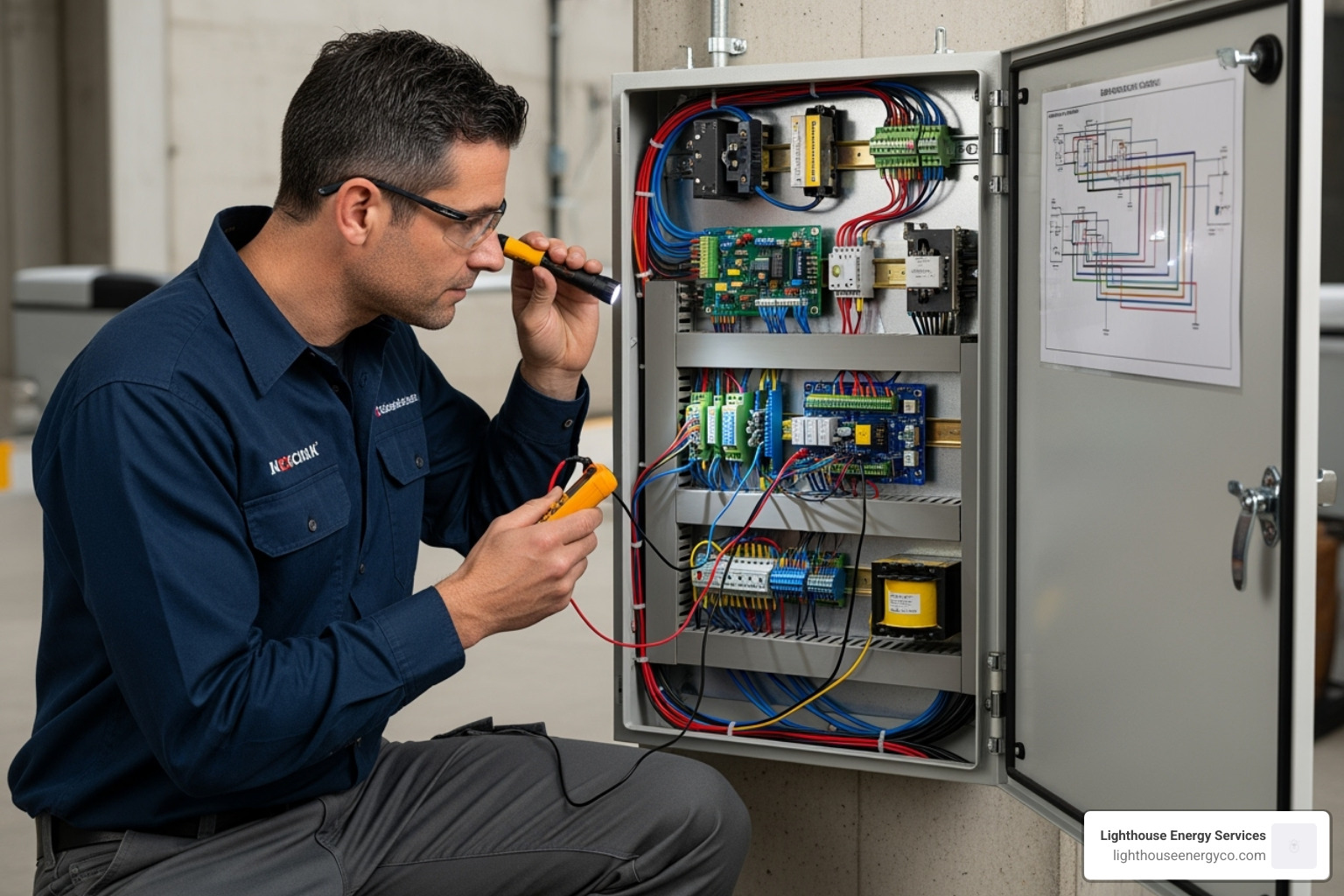
When your gate quits, you need a pro who can act fast. At Lighthouse Energy Services, we’ve streamlined our repair process to be as straightforward as possible. We start with a thorough diagnosis to pinpoint the exact problem, always following strict safety protocols.
Once we identify the issue, we’ll explain it in plain English and walk you through your options, whether it’s a simple repair or a component replacement. Our pricing is always transparent—you’ll know the full cost before we begin any work.
Understanding the Costs of Auto Gate Repair Near Me
We know cost is a primary concern. For most auto gate repair near me calls, you can expect to pay $150 to $500. This range covers common repairs like sensor adjustments, replacing worn rollers, or fixing a faulty control board, including parts and labor.
The final price depends on a few factors. The complexity of the problem is the biggest driver; a simple sensor alignment is at the lower end, while a motor or control board replacement will be at the higher end. The cost of specific parts for your gate brand also plays a role. Labor time for most repairs is 1-3 hours, but complex issues may take longer. Emergency service fees may apply for after-hours calls, though we always believe in fair pricing.
We provide a clear, upfront quote after diagnosis. There are no hidden fees or surprise charges.
Repair vs. Replacement: Making the Smart Financial Decision
Sometimes, the question isn’t if a gate can be fixed, but if it should be. We’ll help you make the smart financial choice.
Consider these factors:
- Age of the system: A gate opener over 10-15 years old that has needed multiple repairs may be nearing the end of its life.
- Extent of damage: If rust has compromised the gate’s structure or multiple major components have failed, replacement is often more cost-effective.
- Cost comparison: A new automatic gate system typically costs between $1,900 and $6,000. If your repair quote is 50% or more of that, replacement is worth considering.
- Frequency of breakdowns: If your gate needs repairs every few months, you’re paying for ongoing frustration and security gaps.
- Technology upgrade: A new system offers modern benefits like smartphone control, better safety features, and improved energy efficiency.
We’ll give you an honest assessment so you can make the right choice for your budget and needs.
How Long Does a Repair Take and What’s the Warranty?
We understand you want your gate fixed quickly. Most common repairs take 1-3 hours, including diagnosis, repair, and testing. This covers sensor adjustments, remote reprogramming, and replacing common components.
More complex jobs, like a motor replacement or major electrical troubleshooting, can take several hours. If a special part needs to be ordered, we are upfront about the timeline and work to source it as quickly as possible.
We stand behind our work. Manufacturer warranties on parts typically range from 2 to 7 years, which we fully honor. We also provide our own warranty on labor because we believe in getting the job done right the first time. If an issue arises from our work, we’ll make it right.
Finding a Reliable Pro for Auto Gate Repair Near Me
When your gate breaks, the search for auto gate repair near me can be daunting. Not all repair services are equal, especially when complex electrical systems are involved. The technician’s skill is just as important as the company’s name.
How to Find a Reliable Automatic Gate Repair Service Near Me
Finding a trustworthy service doesn’t have to be a gamble. Here’s how to vet your options:
- Check online reviews: Look at Google, Yelp, or Facebook to see what real customers say about a company’s punctuality, communication, and effectiveness.
- Ask for recommendations: Word-of-mouth from neighbors or friends is invaluable, especially in a close-knit area like Palm Beach County.
- Verify license and insurance: This is critical. Electrical work requires proper licensing to ensure safety and code compliance. Hiring an unlicensed contractor can lead to shoddy work and void your insurance. We are fully licensed and insured to protect our team and your property.
- Look for quality work: A reputable company should be proud to show you its work. You can view our gallery of completed projects to see the quality we deliver.
What to Look for in a Qualified Gate Repair Technician
The person working on your gate matters most. Here’s what to look for in a technician:
- Licensed and insured: For gate repair, you need a certified electrician. These systems combine high-voltage electricity with heavy mechanical parts, a dangerous combination for an amateur.
- Electrical systems experience: Many gate problems are electrical. Our team consists of qualified electricians who can diagnose everything from simple wiring issues to complex control board failures.
- Knowledge of various brands: A technician familiar with different gate types and brands (LiftMaster, Viking, DoorKing, etc.) can diagnose problems faster and source the right parts.
- Positive customer testimonials: Look for feedback that mentions a technician’s professionalism, clear communication, and problem-solving skills.
- Clear, upfront pricing: A qualified technician will provide a detailed diagnosis and a complete quote before starting work. This transparency is central to our promise.
We’ve built our reputation on having the right people for the job. To learn more about our commitment to quality, you can read more about our qualified team.
Proactive Care: DIY Maintenance to Prevent Costly Repairs
The best repair is the one you never have to make. Regular maintenance protects your investment, keeps your property secure, and saves you money. Just like a car needs oil changes, your gate needs a little preventative care to extend its lifespan and operate safely.
Simple DIY Maintenance and Troubleshooting Steps
You don’t need to be an electrician to perform basic upkeep. These simple tasks can make a big difference:
- Keep tracks and sensors clean: Sweep debris from sliding gate tracks to prevent jamming. Gently wipe photo-eye sensors with a clean, dry cloth to ensure they work correctly.
- Lubricate moving parts: Every few months, use a silicone-based spray lubricant on hinges, rollers, and pivot points to reduce friction and prevent rust. Use a proper chain lubricant for chain-driven gates.
- Test safety features monthly: Place a cardboard box in the gate’s path as it closes. It should immediately stop and reverse. If it doesn’t, call a professional.
- Tighten loose hardware: Vibration can loosen bolts and screws over time. A quick check with a wrench can prevent larger mechanical problems.
- Replace remote batteries: If your remote stops working, try replacing the batteries first. It’s a common and easy fix.
- Check the circuit breaker: After a storm or power surge, your gate opener’s breaker may trip. Check your electrical panel and reset it before calling for service. If it keeps tripping, you have an electrical issue that needs a pro.

The Long-Term Benefits of Regular Professional Maintenance
While DIY steps help, they don’t replace an annual professional inspection. Here’s why it’s worth it:
- Catch problems early: A pro can spot subtle warning signs like a wearing motor bearing or deteriorating wiring, preventing a sudden, inconvenient failure.
- Ensure safety compliance: We test all safety features to verify they meet current standards, protecting your family, visitors, and property.
- Extend equipment life: Comprehensive care, including calibrating sensors and checking electrical connections, can add years to your gate system’s lifespan.
- Maintain property value: A smoothly operating gate improves your home’s curb appeal and functionality. Regular maintenance ensures it remains an asset.
- Gain peace of mind: Knowing your gate has been professionally inspected provides reassurance that your property is secure.
At Lighthouse Energy Services, we bring decades of electrical expertise to every gate maintenance visit. Our team knows the electrical systems that power these gates inside and out, and we’re available 24/7 when you need us.
Frequently Asked Questions about Automatic Gate Repair
When your gate acts up, you have questions. Here are answers to the ones we hear most often.
Can I repair my automatic gate myself?
It depends. Simple tasks like changing remote batteries, cleaning tracks, and wiping sensors are great for DIY. However, you should leave electrical and mechanical repairs to a professional.
DIY electrical work is dangerous. Gate systems involve high voltage. Without proper training, you risk electric shock, fire, or causing more expensive damage. Heavy moving parts also pose a serious injury risk. A mistake could lead to a crushed hand or worse.
Call a professional if the motor is unresponsive, the control board shows errors, sensors fail after cleaning, or you see any wiring or structural damage. A DIY attempt on a complex problem often costs more to fix in the end.
What are the most common types of automatic gates?
Different properties use different gate styles, each with unique characteristics:
- Sliding gates move horizontally on a track or cantilever system. They are ideal for sloped driveways or properties with limited space for a gate to swing open.
- Swing gates operate like a traditional door, pivoting on hinges. They offer a classic look but require clear space for the gate to swing.
- Overhead gates lift vertically, similar to a garage door. They are common in underground parking and commercial complexes where overhead clearance is available.
- Barrier arm gates use a long arm to control vehicle access and are typically found in parking lots and the entrances to gated communities.
What safety features should an automatic gate have?
Safety features are non-negotiable for protecting people, pets, and vehicles.
- Photo-eye sensors: These create an infrared beam across the gate’s path. If anything breaks the beam while the gate is closing, it should immediately stop and reverse.
- Reversing mechanisms: If the gate physically contacts an obstruction, a pressure-sensitive mechanism should cause it to reverse direction.
- Emergency release: This allows you to manually disengage the opener during a power outage, so you’re never trapped.
- Warning signs: Clear signage alerting people to the automatic gate is a simple but important safety measure.
- UL 325 compliance: This is the gold standard for gate operator safety, established by Underwriters Laboratories. Reputable technicians ensure all repairs and installations meet these standards. You can learn more from industry leaders like DoorKing.
If your gate is missing these features or they aren’t working, it’s a liability. We can assess your system and bring it up to current safety standards.
Conclusion: Secure Your Peace of Mind with Professional Gate Repair
When your automatic gate stops working, it compromises your property’s security, privacy, and your daily routine. The frustration of being stuck is something no one should have to deal with.
This guide has covered the warning signs of a failing gate, common problems, typical repair costs, and the importance of finding a licensed professional. We’ve also shown how simple DIY maintenance can prevent many issues before they start.
Finding the right pro is crucial. You need a licensed and insured electrician who is experienced with your gate type, offers transparent pricing, and provides prompt, respectful service.
At Lighthouse Energy Services, we specialize in the electrical challenges of gate repair for homes and businesses across Palm Beach County. Gate problems are urgent, which is why we offer 24/7 availability for electrical issues. When you call, you speak directly with a qualified electrician, not an answering service.
Our approach is simple: prompt, professional service with no hidden fees. We diagnose the problem accurately, explain your options, and get your gate working again quickly. Whether you’re in West Palm Beach, Boca Raton, Fort Lauderdale, Jupiter, or anywhere in Palm Beach, Broward, or Miami-Dade County, our certified electricians are ready to help.
Your automatic gate is a major investment. When it needs repair, you deserve service that’s done right the first time. Contact us for expert gate repair services and let us restore your peace of mind today.