
Why Electrician Outdoor Lighting Matters for Your Home
Electrician outdoor lighting transforms your property by improving security, increasing its value, extending your outdoor living hours, and enhancing safety. A well-lit exterior deters intruders, boosts curb appeal, lets you enjoy your patio after dark, and prevents trips on dark pathways.
However, outdoor electrical work is complex and potentially dangerous. You need an electrician for tasks like:
- Installing new circuits or underground wiring
- Working with line-voltage (120V) systems
- Calculating electrical loads to prevent overloads
- Ensuring wiring is safe and fire-resistant
- Meeting local building codes and passing inspections
Improper wiring can lead to shocks, fires, or costly code violations. Many projects require permits and inspections that only a licensed electrician can handle.
This guide covers when to DIY, when to hire a professional, what affects costs, and how to design a code-compliant system. I’m Bruce Kemp, an electrical contractor who has seen the benefits of professional electrician outdoor lighting and the expensive mistakes from cutting corners. Let’s ensure your project is done right.
The Transformative Benefits of Professional Outdoor Lighting
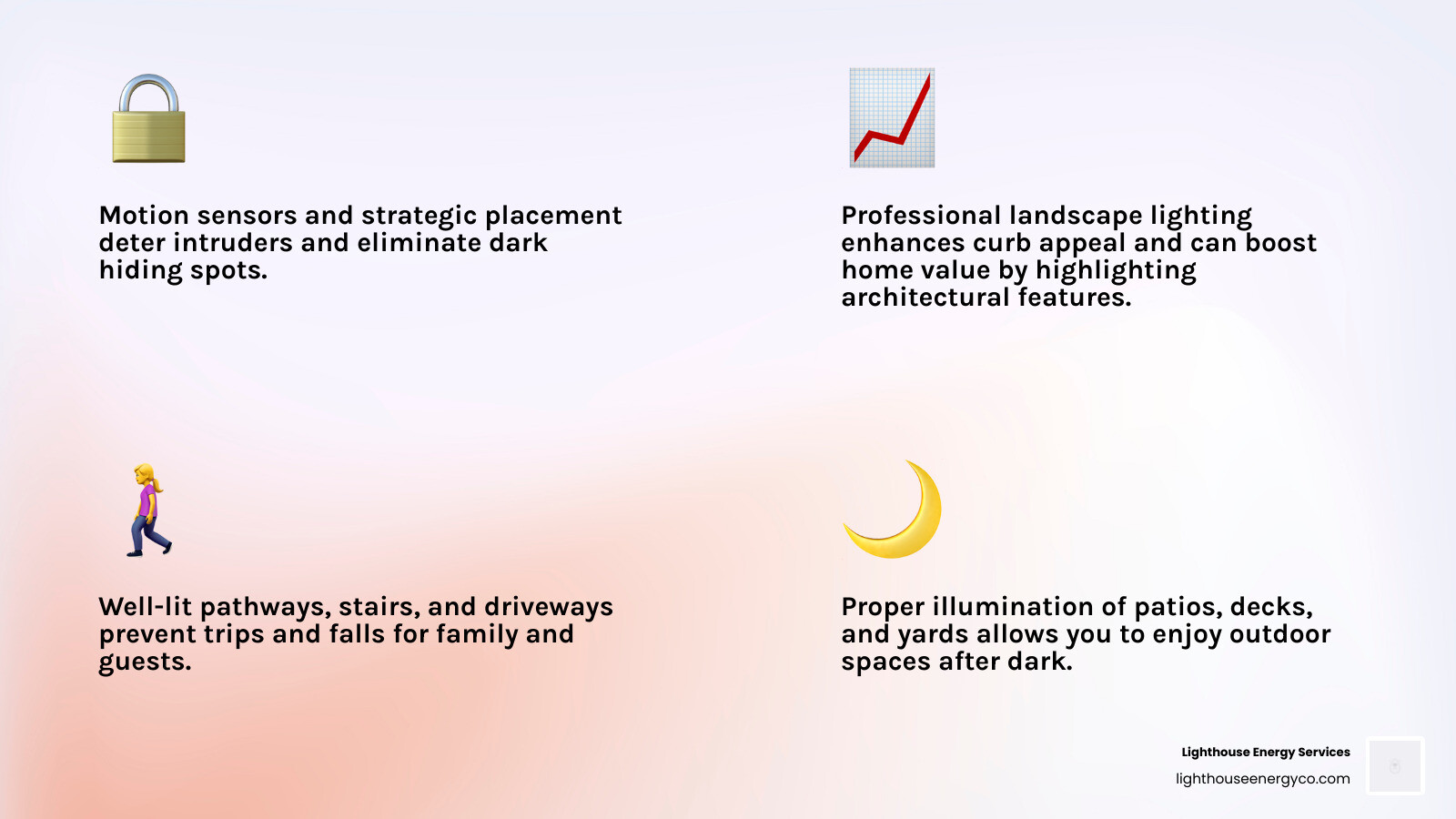
Proper outdoor lighting doesn’t just illuminate—it transforms. Strategic electrician outdoor lighting turns your property into a showcase, maximizing curb appeal and increasing its value. Real estate experts agree that quality outdoor lighting is a cost-effective home improvement, signaling to buyers that a property is safe, stylish, and well-maintained.
Beyond resale value, professional lighting extends your living space. Patios, decks, and yards that once went dark after sunset become usable extensions of your home, perfect for hosting parties or enjoying a quiet evening outdoors. It also boosts security; according to the FBI, homes with adequate outdoor lighting are far less likely to be targeted by burglars.
Highlighting Your Home’s Best Features
Every home has unique architectural details or landscape features that disappear after dark. Strategic electrician outdoor lighting brings them to life. Carefully placed spotlights and uplights can draw attention to stonework, columns, or a magnificent tree. Landscape lighting highlights the textures of gardens, while accent lighting creates focal points that guide the eye and add drama. The goal is to create an intentionally designed space, not an accidentally lit one. See what’s possible by looking at our past work: View Our Projects.
Boosting Security and Safety
Darkness provides cover for intruders. A well-lit perimeter eliminates hiding spots around your garage or side yard, making your property a much less attractive target. Motion-sensor lights add another layer of protection by startling potential trespassers and alerting you to their presence. When combined with timers, your home appears occupied even when you’re away.
Safety is another key benefit. Poorly lit pathways, stairs, and driveways are tripping hazards. Proper outdoor lighting prevents these accidents before they happen. Well-placed step, deck, and path lights ensure family and guests can steer your property safely after dark, giving everyone peace of mind.

Types of Outdoor Lighting and Design Considerations
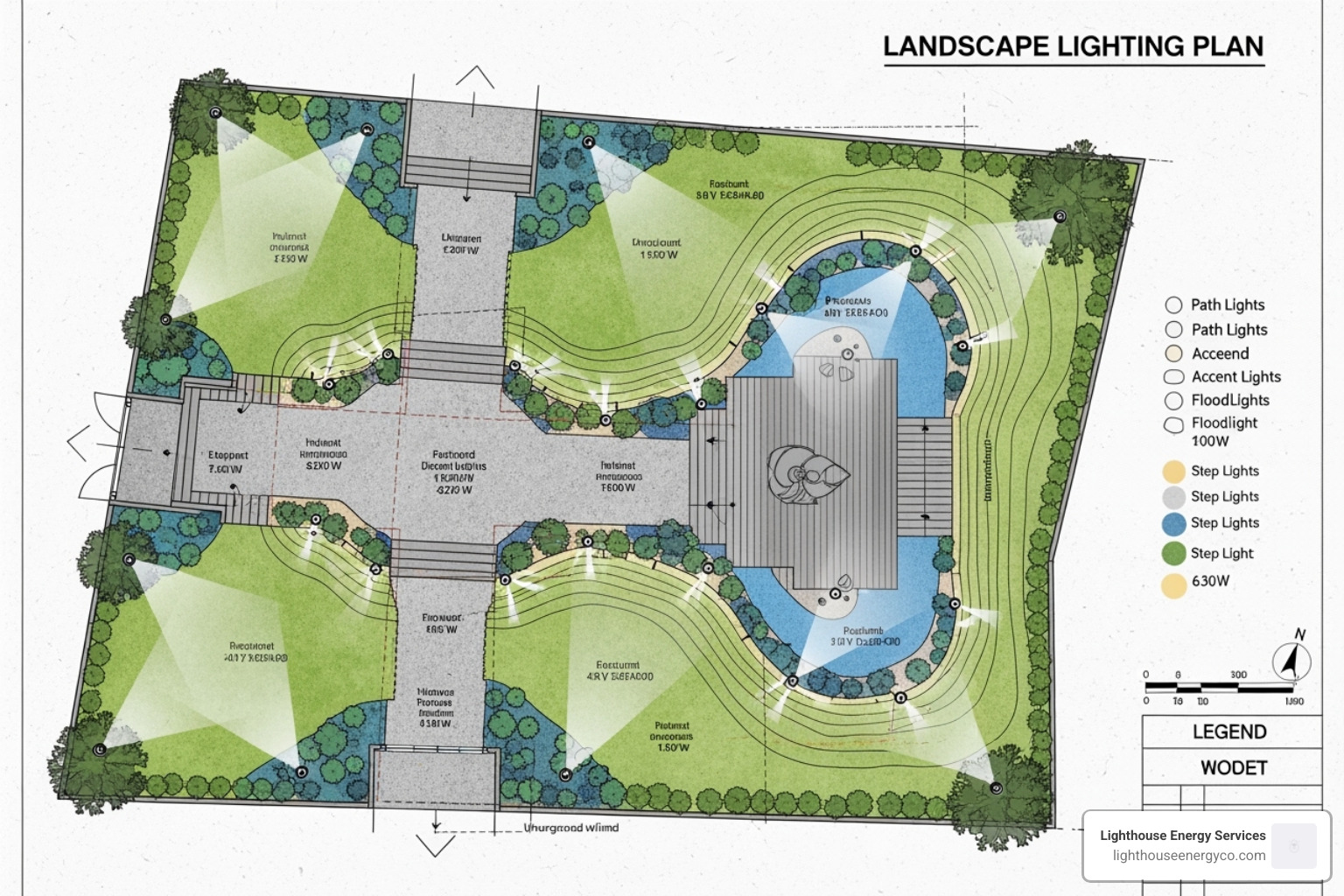
Great outdoor lighting design uses a technique called layering to create depth, function, and atmosphere. It combines three types of light:
- Ambient lighting: The overall foundational glow for comfort.
- Task lighting: Focused light for specific areas like grills or steps.
- Accent lighting: Adds drama by highlighting trees, gardens, or architecture.
When designing electrician outdoor lighting systems, we strategically layer these types for a space that is both practical and beautiful. We also prioritize energy efficiency using modern LED technology and smart controls, which allow you to schedule, dim, or even change the color of your lights from a phone.
Essential Outdoor Lighting Fixtures
Choosing the right fixture is key. Common options include:
- Path lights: Guide guests safely along walkways and driveways.
- Spotlights and uplights: Create drama by highlighting trees and architectural features.
- Floodlights: Provide bright, wide illumination for security or large areas, often with motion sensors.
- Wall sconces: Add style and functional light to porches and entryways.
- Step and deck lights: Discreetly improve safety on stairs and decks.
- String lights: Create a festive, resort-like atmosphere over patios.
- Bollard lights: Sturdy posts that illuminate pathways or garden beds.
Key Design and Technical Factors
Several technical factors influence your lighting design:
- Voltage: Low-voltage (12V) systems are safer and ideal for most landscape lighting. Line-voltage (120V) systems are needed for brighter applications like security floodlights.
- Lumens (Brightness): We calculate the right brightness for each area, from soft 100-lumen path lights to powerful 700+ lumen security lights.
- Color Temperature: Warmer tones (2700K-3000K) create a cozy, inviting glow, while cooler tones are more functional.
- Weather Resistance: In South Florida, fixtures must be weatherproof to withstand rain, sun, and storms. We only use fixtures rated for our climate.
- Dark-Sky Compliance: We can use shielded fixtures that direct light downward to reduce light pollution, which is better for wildlife and neighbors.
Our experienced electricians consider all these factors to create a design that meets your vision and local codes. Learn more about our expertise on our About Lighthouse Energy Co. page.
DIY vs. Hiring a Professional for Electrician Outdoor Lighting
While simple DIY projects like solar path lights are satisfying, electrician outdoor lighting that connects to your home’s power is a different story. A single mistake can lead to shock, fire, or code violations. Anything beyond basic plug-in fixtures involves risks that most homeowners aren’t equipped to handle.
Here’s a comparison to help you decide:
| Factor | DIY Installation | Professional Installation (Electrician) |
|---|---|---|
| Safety | High risk of electrical shock, fire hazards, and property damage | Ensures adherence to safety codes, minimizes risks, handles complex wiring safely |
| Cost | Lower upfront material cost, but potential for costly mistakes and repairs | Higher upfront cost, but saves money on repairs, energy bills, and avoids fines |
| Code Compliance | High risk of non-compliance, leading to fines and decreased home value | Guarantees compliance with local and national electrical codes, handles permits |
| Complexity | Limited to simple, low-voltage, or battery-operated fixtures | Handles all complexities, including new circuits, underground wiring, and smart systems |
| Final Result | Often uneven, less durable, and aesthetically limited | Professional design, seamless integration, durable, and aesthetically pleasing |
DIY looks cheaper initially, but the cost of fixing mistakes, replacing damaged equipment, or dealing with unpermitted work during a home sale can be substantial.
The Significant Risks of DIY Electrical Work
DIY electrical tutorials often omit the serious dangers. Electrocution is a real risk when dealing with moisture and outdoor wiring. Fire hazards from improper connections or overloaded circuits can cause catastrophic damage. Furthermore, skipping required permits leads to fines and major problems when selling your home, as unpermitted work must be torn out and redone by a licensed professional.
Why You Need a Licensed Electrician for Outdoor Lighting
Hiring a professional for electrician outdoor lighting protects your home, family, and investment. A licensed electrician guarantees:
- Safety: We are trained to handle complex systems, follow the National Electrical Code (NEC), and ensure all connections are weatherproof and secure.
- Permits and Inspections: We handle all the necessary paperwork and inspections, protecting you from fines and ensuring your system is legal.
- Correct Load Calculations: We assess your electrical panel and circuits to prevent dangerous overloads, which can cause fires or damage your system.
- Professional Results: We use specialized tools and have the experience to design and install an efficient, durable system that looks great and lasts for decades.
- Warranty and Insurance: Our work is backed by a warranty and covered by insurance, giving you peace of mind that DIY projects can’t offer.
We’ve seen homeowners spend thousands fixing DIY mistakes. For expert electrician outdoor lighting installation in Palm Beach County, Contact Us for Outdoor Lighting Services. We do the job right the first time.
Understanding the Installation Process and Costs
Professional electrician outdoor lighting installation is a careful process that turns your vision into reality. Our process includes:
- Consultation & Site Assessment: We listen to your goals and examine your property’s electrical infrastructure and landscape.
- Custom Design: We create a detailed plan showing fixture types, placements, and wiring routes.
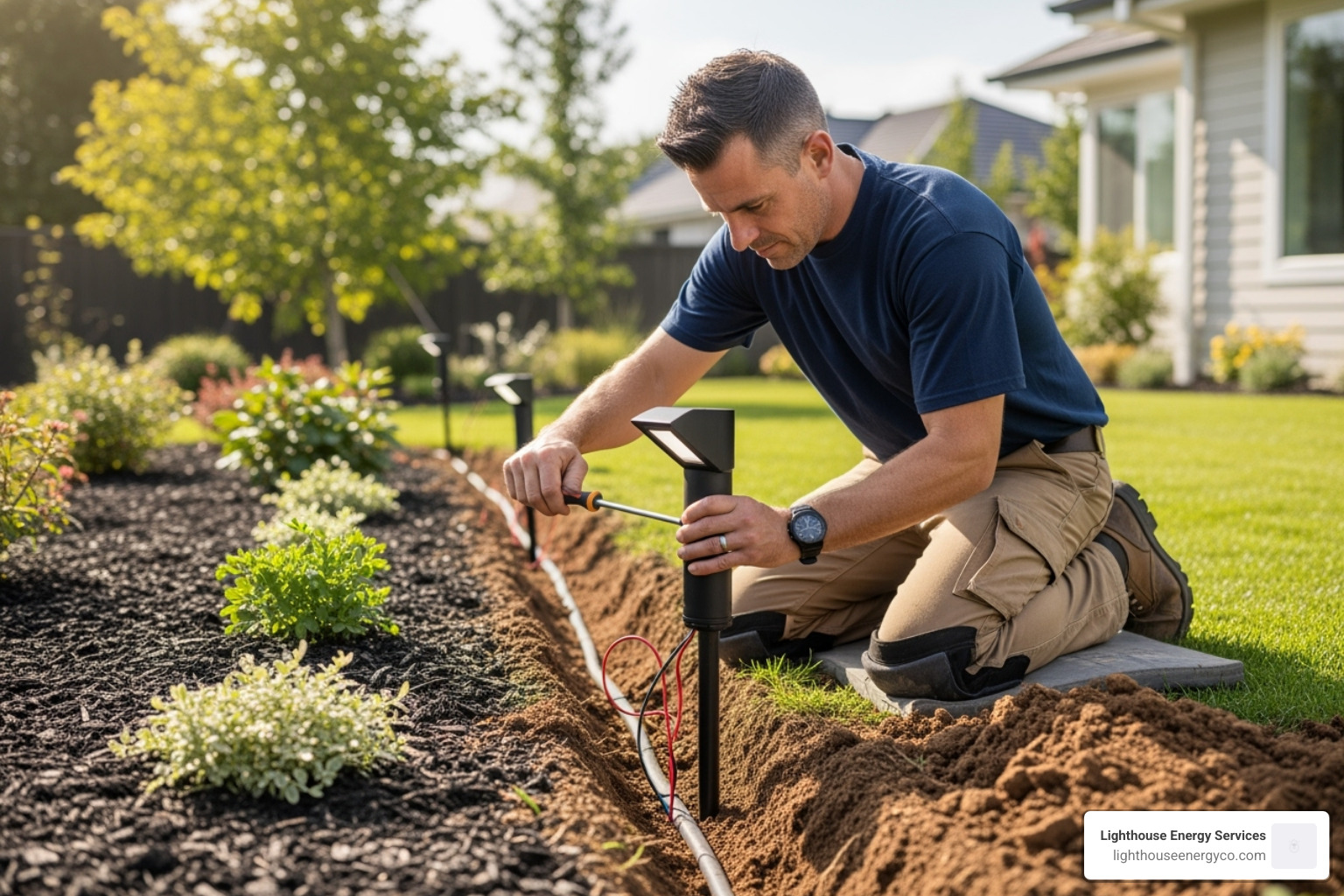
- Installation: This includes trenching for underground wires (after a utility locate), mounting fixtures, installing transformers for low-voltage systems, and concealing all wiring.
- Testing: We test the entire system to ensure every light works correctly and safely, making adjustments as needed.
Factors That Influence Installation Costs
Costs vary by project. Key factors include:
- Number and Type of Fixtures: More fixtures or higher-end models increase material and labor costs.
- Project Complexity: Running new circuits or extensive trenching is more complex and costly than tapping into an existing outlet.
- Wiring Accessibility: Difficult wiring paths (e.g., through finished walls) increase labor time.
- Panel Upgrades: If your current electrical panel can’t handle the new load, an upgrade is necessary for safety.
- Permit Fees: Required for most new electrical work, fees are set by your local municipality.
We provide a detailed, transparent estimate with no hidden fees after our initial assessment.
The Importance of Permits for Electrician Outdoor Lighting
Installing new circuits or running underground wiring almost always requires an electrical permit and a final inspection. This is not just red tape; it’s crucial for safety and code compliance. Inspected work is guaranteed to meet strict standards, protecting your family from fire and shock hazards.
Unpermitted electrical work can decrease your home’s value, void your homeowner’s insurance, and lead to fines. As licensed electricians, we handle all permit paperwork and inspections to ensure your electrician outdoor lighting is safe, legal, and adds value to your property. If you have questions, Contact Us for Outdoor Lighting Services.
Frequently Asked Questions about Outdoor Lighting
Here are answers to common questions we receive about electrician outdoor lighting.
Do I need a dedicated circuit for my outdoor lights?
It depends. A few energy-efficient LED lights may be fine on an existing circuit. However, extensive systems with multiple fixtures or security floodlights often require a dedicated circuit to prevent overloads. Overloading a circuit can trip breakers and create a fire hazard. An electrician must perform a load calculation to determine if a new circuit—or even a panel upgrade—is needed for safety.
What’s the difference between low-voltage and line-voltage lighting?
- Low-voltage (12V) lighting is the standard for landscape and accent lighting. It’s safer to work with and less expensive to install. It’s perfect for path lights, garden lights, and uplighting trees.
- Line-voltage (120V) lighting uses your home’s full power. It’s necessary for brighter applications like security floodlights, powerful wall fixtures, and outdoor outlets. Installation is more complex and strictly requires a licensed electrician.
Most homes benefit from a combination of both types.
How can I make my outdoor lighting energy-efficient?
Saving energy is easy with modern technology. Here are the best ways:
- Use LED Bulbs: They consume a fraction of the energy of older bulbs and last for years.
- Install Timers and Photocells: Automate your lighting to turn on at dusk and off at dawn or on a set schedule, so you never waste electricity.
- Add Smart Controls: Dim your lights, create schedules, and control everything from your phone for maximum convenience and savings.
- Use Motion Sensors: For security lights, motion sensors ensure they only turn on when movement is detected, which improves security while saving significant energy.
Conclusion: Illuminate Your Property with Confidence
Professional electrician outdoor lighting makes your home safer, more beautiful, and more valuable. It transforms your property by deterring intruders, highlighting its best features, and extending your outdoor living hours.
While simple solar lights are a fine DIY project, any work involving your home’s electrical system requires professional expertise. The risks of DIY electrical work, including fire, shock, and code violations, are too great. A professional installation guarantees your lighting is safe, code-compliant, and durable enough for the South Florida climate.
At Lighthouse Energy, our licensed electricians manage the entire process, from design and permitting to final inspection. We serve residents across Palm Beach County, offering 24/7 service with no hidden fees. We believe in getting the job done right the first time.
Ready to transform your property with beautiful, safe outdoor lighting? Explore Our Electrical Services and let’s start planning your project today.