
Why Your Home’s Electrical System Needs Attention Now
Whole house rewiring is the process of replacing all the electrical wiring in your home to meet current safety codes and support modern technology. If your home is over 30 years old or you’re seeing warning signs like flickering lights and tripped breakers, it’s time to consider this critical safety upgrade.
Key Facts About Whole House Rewiring:
- When It’s Needed: Homes over 30 years old, or those with outdated wiring and frequent electrical issues.
- Average Cost: $8,000 to $20,000+, depending on home size and complexity.
- Timeline: Typically 3-10 days.
- Benefits: Prevents electrical fires, supports modern appliances, increases home value, and may lower insurance premiums.
- Warning Signs: Frequent breaker trips, flickering lights, warm outlets, burning smells, and two-prong outlets.
Older homes weren’t built for today’s high-tech lifestyle. Outdated wiring can’t safely power modern appliances, smart devices, and EV chargers, creating a significant fire risk. Rewiring not only eliminates this danger but also future-proofs your home, increases its value, and improves energy efficiency.
I’m Bruce Kemp, and with over 25 years in electrical contracting, my team and I have guided countless homeowners through this process. We understand the safety concerns and modern demands that make rewiring essential for older homes.
Is Your Home’s Wiring a Hidden Hazard? Key Signs You Need an Upgrade
Annoying electrical quirks like dimming lights or frequently tripped breakers are often warning signs that your system is dangerously overloaded. Listening to these signals can prevent a serious safety issue.
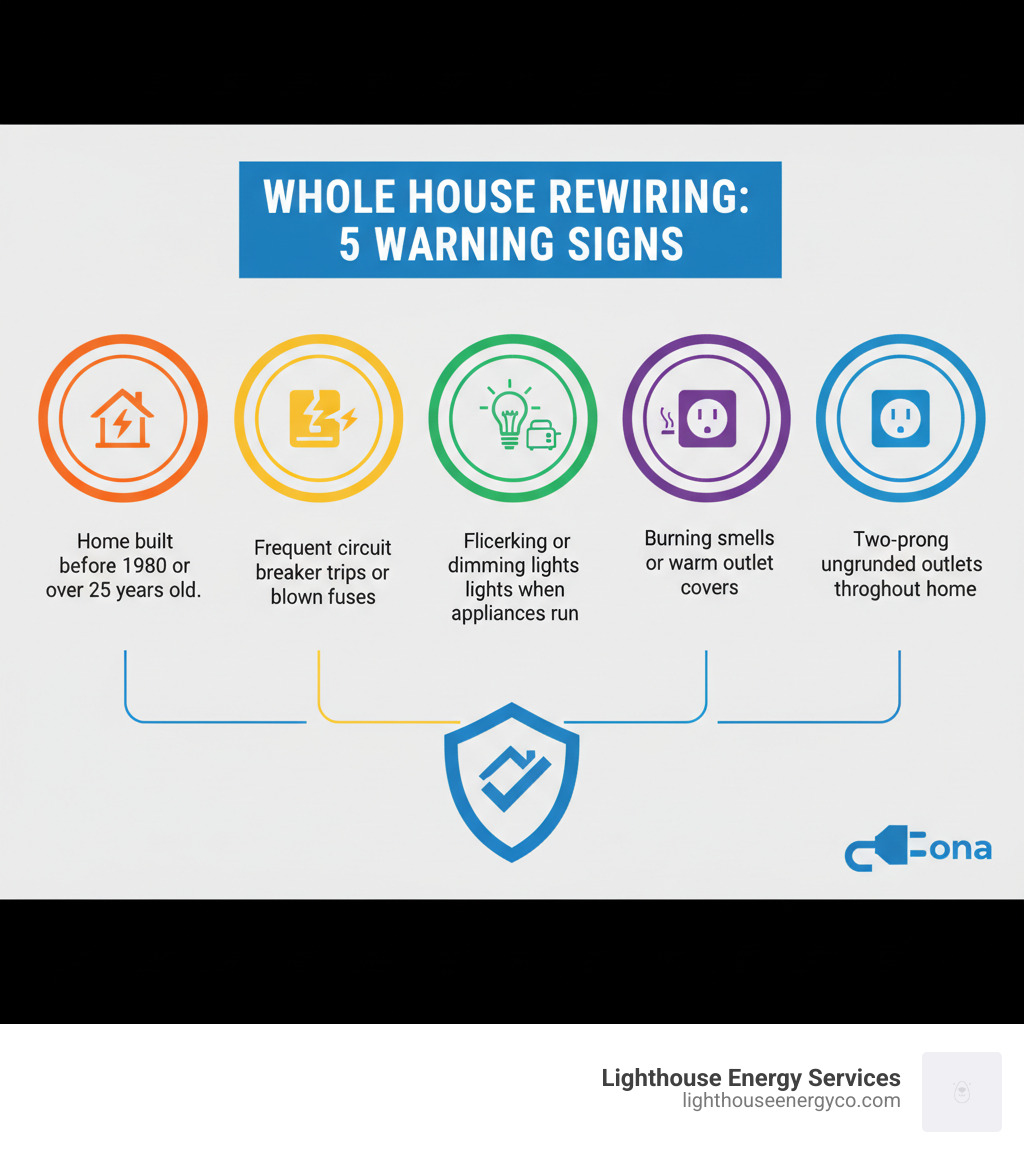
Age is a major red flag. If your home was built before 1980, its electrical system likely wasn’t designed for modern power demands. According to NFPA Electrical Safety Statistics, outdated wiring significantly increases the risk of electrical fires. Look for these other clues that it’s time for a whole house rewiring:
- Flickering or Dimming Lights: This indicates an overloaded system or voltage fluctuations when appliances turn on.
- Frequent Breaker Trips: Your circuits can’t handle your power needs. Constant resetting is a clear warning.
- Burning Smells: A burning odor from outlets or the panel indicates overheating wires and is an immediate fire hazard. Call a professional right away.
- Warm or Buzzing Outlets: Warmth, buzzing, or crackling sounds suggest loose wiring or dangerous electrical arcing.
- Two-Prong Outlets: These ungrounded outlets lack a critical safety feature that protects against electrical shock.
- Constant Use of Extension Cords: Relying on power strips means your home lacks sufficient outlets and capacity.
Ignoring these signs increases fire risk, can damage expensive electronics, and may violate safety codes, potentially affecting your homeowner’s insurance coverage. You can learn more about our comprehensive electrical services to keep your system safe.
Common Types of Outdated Wiring and Their Risks
Knowing what’s in your walls helps you understand the urgency of an upgrade. Certain types of old wiring pose significant dangers.
| Wiring Type | Common Era | Key Characteristics | Primary Risks |
|---|---|---|---|
| Knob and Tube | Pre-1940s | Ceramic knobs/tubes, cloth insulation, no ground | Fire hazard (brittle insulation, no ground), difficult to insulate over |
| Aluminum Wiring | 1960s-1970s | Single-strand aluminum conductors | Overheating at connection points (fire hazard), oxidation, loose connections |
| Cloth-Insulated | Pre-1960s | Wires wrapped in cloth/rubber insulation | Insulation degradation (brittle, cracked), fire hazard, shock risk |
Knob and tube wiring, common before the 1940s, lacks a safety ground wire. Its cloth insulation becomes brittle with age, exposing live conductors and creating a fire hazard, especially if covered by modern insulation.
Aluminum wiring, used in the ’60s and ’70s, is prone to expanding and contracting, which loosens connections at outlets and switches. These loose connections can overheat and cause fires.
Cloth-insulated wiring, found in pre-1960s homes, has insulation that degrades, cracks, and falls off over time. This exposes bare wires, creating severe shock and fire risks.
If an inspection reveals any of these wiring types, a rewire is a critical safety measure.
The Lifespan of Your Electrical System
Electrical systems have a finite lifespan. Most electrical wiring lasts 25 to 30 years, while an electrical panel’s lifespan is about 20 to 25 years. After this period, insulation degrades and components wear out, making the system less reliable and more dangerous.
Even if your wiring is physically intact, it may be functionally obsolete. A system from 1970 wasn’t designed to power a modern home’s array of computers, smart devices, and EV chargers. Ignoring these timelines increases safety risks, leads to higher energy bills, and can cause issues with your homeowner’s insurance. Regular inspections and timely upgrades are key to keeping your home safe and efficient. Our team at Lighthouse Energy Services can assess your system’s condition through our electrical services.
The Whole House Rewiring Process: From Inspection to Final Sign-Off
A whole house rewiring can feel like a massive undertaking, but a clear process makes it manageable. At Lighthouse Energy, we ensure the project is as smooth and transparent as possible.

A typical project takes 3 to 10 days, depending on your home’s size, age, and accessibility. We handle all necessary permits and ensure every step complies with local and national electrical codes, like the Minnesota State Electrical Code, which sets high standards for safety.
Step 1: Initial Assessment and Planning
Every project begins with a thorough inspection. We examine your current system to identify the type and condition of the wiring. We also discuss your present and future power needs, considering everything from a home office to an EV charger or smart home system. We’ll assess your electrical panel’s capacity to see if an upgrade to 200-amp service is needed. Following the assessment, we provide a detailed, transparent quote with no hidden fees, so you know exactly what to expect.
Step 2: Preparing Your Home for a Whole House Rewiring
A little preparation helps the project run smoothly. We ask that you clear furniture and valuables away from walls to give our team access. While we use drop cloths and clean up daily, covering remaining items with sheets can protect them from dust. Plan for temporary power outages, which are necessary for safety. We will coordinate these with you in advance. Daily communication is key, so you’ll always know our progress and the plan for the next day.
Step 3: Installation and Upgrades
This is where the change happens. Our electricians will carefully remove or bypass the old, unsafe wiring, minimizing wall damage by using attics and crawl spaces whenever possible. Some drywall cutting is usually necessary, but we keep it to a minimum.
We then install new, high-quality copper wiring, the industry standard for safety and conductivity. Most projects include upgrading the electrical panel to a modern 200-amp unit to handle today’s power loads. We’ll also install new, grounded outlets and switches, including safety upgrades like GFCI and AFCI protection. Once the installation is complete, we test every circuit and coordinate the final inspection with the local building department. When we’re finished, you’ll have a safe, modern electrical system built to last. Learn more about our approach on our electrical services page.
Investing in Your Home: Costs, Benefits, and Modern Upgrades
A whole house rewiring is an investment in your home’s safety, value, and future. The benefits go far beyond just fixing electrical issues.
- Increased Safety: This is the most important benefit. Replacing hazardous wiring dramatically reduces the risk of electrical fires and shocks.
- Higher Resale Value: A rewired home is a major selling point. Buyers see it as a critical upgrade that’s already been handled, and you may recoup a significant portion of the cost at resale.
- Energy Efficiency: New wiring is more efficient than old, degraded systems, which can leak energy and drive up your utility bills. Learn more from the U.S. Department of Energy.
- Support for Modern Technology: A new system can safely power everything from high-efficiency HVAC systems and EV chargers to a full suite of smart home devices.
- Peace of Mind: Knowing your home’s electrical system is safe and reliable is an invaluable benefit.
Understanding the Cost of a Whole House Rewiring
A complete rewiring project typically costs between $8,000 and $20,000, though larger or more complex homes can cost more. Several factors influence the final price:
- Home Size and Age: Larger and older homes require more materials and labor.
- Accessibility: Costs are lower if wiring is easily accessible through attics or crawl spaces. Cutting into walls and ceilings increases labor and repair costs.
- Materials and Labor: This includes copper wire, a new electrical panel, outlets, and switches, plus the cost of licensed electricians, which makes up the bulk of the investment.
- Permits and Repairs: Budget for permit fees ($200-$900) and subsequent drywall repair and painting. We recommend a 10-20% contingency fund for unforeseen issues.
At Lighthouse Energy Services, we provide transparent, comprehensive quotes with no hidden fees. Contact us for a detailed estimate through our electrical services page.
Smart Upgrades to Consider During Your Rewire
A rewire is the perfect time to add modern features for a fraction of the cost of retrofitting them later. Consider these popular upgrades:
- 200-Amp Panel Upgrade: The new standard for most homes, providing ample power for all your needs.
- GFCI Outlets: Essential for shock protection in kitchens, bathrooms, and outdoor areas.
- AFCI Protection: Arc-fault circuit interrupters prevent fires by detecting dangerous electrical arcs in wiring.
- Whole-Home Surge Protection: Protects all your electronics and appliances from power surges.
- USB Outlets and Smart Switches: Add convenience and prepare your home for smart technology.
- Dedicated Circuits: Ensure high-power appliances like refrigerators and microwaves have their own circuit to prevent overloads.
DIY vs. Professional Rewiring: Why Expertise is Non-Negotiable
While the DIY spirit is admirable for many home projects, electrical work is not one of them. When it comes to a whole house rewiring, the risks of going it alone are catastrophic. There is zero margin for error.

The Dangers of DIY Electrical Work:
- Fire Risk: Improper connections and overloaded circuits are leading causes of electrical fires. A small mistake can smolder inside walls for weeks before igniting.
- Electrocution Risk: Without proper training and safety equipment, working with electricity can be fatal.
- Code Violations: DIY work almost never meets the strict safety standards of the National Electrical Code (NEC), leading to failed inspections and costly rework.
- Insurance Invalidation: Most homeowner’s insurance policies will not cover damages caused by unpermitted or non-professional electrical work. A fire could leave you with a total financial loss.
A whole house rewiring requires years of training to understand load calculations, code requirements, and safe installation practices. It is a job exclusively for professionals.
Choosing a Qualified Electrician
Finding the right professional is critical. Here’s what to look for:
- Licensing and Insurance: Verify that the electrician is state-licensed and carries both liability and workers’ compensation insurance. This protects you.
- Rewiring Experience: Ask for specific experience with whole house rewiring projects in homes similar to yours.
- References and Reviews: A reputable contractor will provide references from recent clients. Check online reviews as well.
- Code Knowledge: Your electrician must be an expert in both the National Electrical Code (NEC) and all local codes.
- Detailed Written Contract: Insist on a contract that outlines the full scope of work, materials, timeline, total cost, and warranty.
- Permits and Inspections: A professional handles all permitting and ensures the work is inspected and approved by the local building authority.
At Lighthouse Energy, we’ve built our reputation on trust and professionalism. Our qualified electricians are available 24/7 to ensure your whole house rewiring is done right, with no hidden fees or shortcuts. Learn more About Us and our commitment to serving South Florida homeowners.
Frequently Asked Questions about Home Rewiring
We understand you have questions about whole house rewiring. Here are clear, straightforward answers to the most common concerns.
How long does it take to rewire a house?
A typical project takes 3 to 10 days. The exact timeline depends on your home’s size, age, construction, and the complexity of the job. A smaller, accessible home may take less time, while a large, older home will take longer. We provide a realistic timeline after our initial assessment.
Can I live in my house during the rewiring?
Yes, it’s possible to stay in your home, but you should expect disruptions. There will be noise, dust (though we work to contain it), and scheduled power outages for safety. For families with young children, pets, or those who work from home, arranging a temporary stay elsewhere is often less stressful. We will communicate with you daily to minimize inconvenience.
Will rewiring damage my walls?
Our electricians are skilled in using minimally invasive techniques, utilizing attics and crawl spaces whenever possible. However, some drywall cutting is usually unavoidable to install new wiring, outlets, and switches. We keep cuts as small and strategic as possible and will discuss any anticipated cosmetic work with you during the planning phase. You will need to budget for drywall repair and painting after the electrical work is complete and inspected.
Make Your Home Safer and More Efficient
Investing in a whole house rewiring is a powerful commitment to your family’s safety and your home’s long-term value. A modern electrical system prevents devastating fires, supports the technology you rely on daily, and can even lower your energy bills.
This is not a DIY project. The risks are too high and the work too complex. You need a licensed, experienced professional who guarantees the work is safe, compliant, and built to last. A professionally rewired home offers higher resale value and, most importantly, peace of mind.
If you’re in Palm Beach, Broward, or Miami-Dade County, Lighthouse Energy is here to help. We guide homeowners throughout South Florida, including Boca Raton, Fort Lauderdale, and Jupiter, through the rewiring process. We start with a comprehensive inspection and provide a transparent quote with no hidden fees.
Our qualified electricians are available 24/7 because we believe in getting the job “done right, and done right now.” Let us help you get back to enjoying your home with complete confidence.
Ready to take the next step? Contact us today to schedule your electrical service!